
Making plant-based burgers meatier with small animal-derived additions
Projects · Work with us · Team
Labs / Projects / Blends 2.0: optimizing animal-derived ingredients
Tools & formulations
Sensory performance
Completed
Full report available
Making plant-based burgers meatier with small animal-derived additions
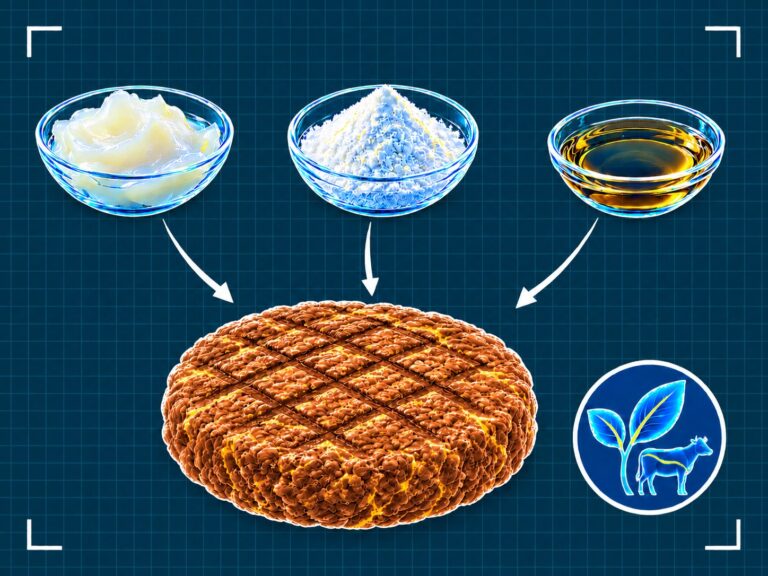
About 14% of a mix of beef tallow, bovine collagen and a meat flavor extract moved a plant-based burger’s meatiness a third of the way to beef.
 Stage
Completed · all three stages done
 Timeline
2025–2026 · full report July 2026
 Execution
Labs team, with New Sense Research tasting
 Open output
Full report and one-pager · open access
The gap
Blended meat: closer to beef, but still meat-heavy
Mixing plant protein into meat closes much of the taste gap, but conventional blends do so by retaining a large share of minced meat.
Plant-based burgers still trail beef in the areas tasters notice most: meaty taste, off-flavors, and juiciness. Blended products close much of that gap by mixing plant ingredients into minced meat, but they still keep meat as a major component. Limited open data show how far a mostly plant-based burger can move toward beef with a small, targeted dose of animal-derived ingredients.
35%
Less often described as savory: plant-based meats against the animal versions, in blind tastings (NECTAR, Taste of the Industry 2025)
30%
The least a product must substitute of its animal ingredients to count as a blended (Balanced Protein) product (Food System Innovations, Balanced Proteins: State of the Category 2025)
Who benefits
Who gains from meatier, mostly plant-based burgers
The full report, the formulations and the standard plant-based burger they were tested in are published open access, so any company or lab can build on them.
Plant-based and blended meat producers
Open data on which animal-derived ingredients, at which levels, move a plant-based burger toward beef, as a starting point for their own trials.
Meat processors
A possible higher-value use for side streams such as tallow and meat juices, as ingredients that make mostly plant-based products taste meatier.
Ingredient suppliers
Evidence on where fat and collagen ingredients add value at low levels, and where they don’t.
Researchers
An open, standard plant-based burger recipe for testing new ingredients against the same baseline.
How it works
Add small doses of high-impact animal ingredients
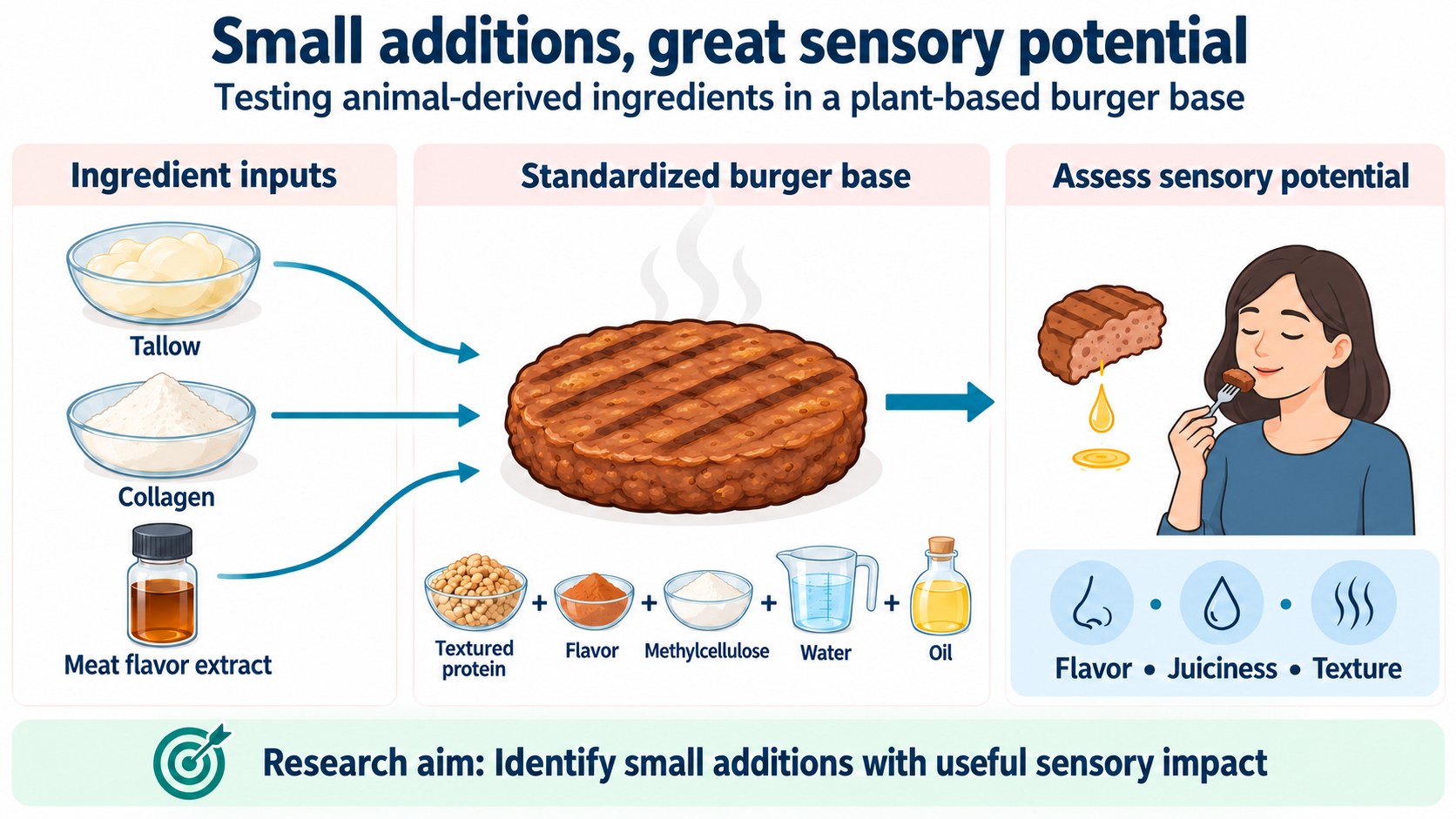
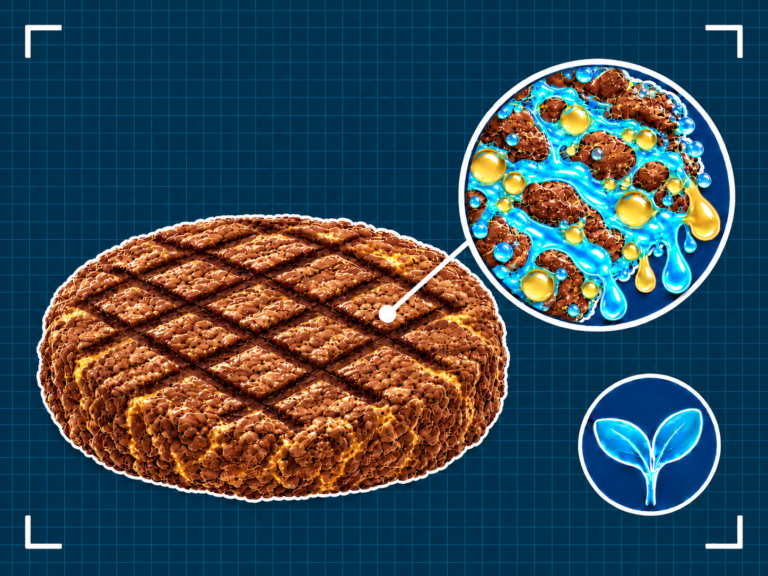
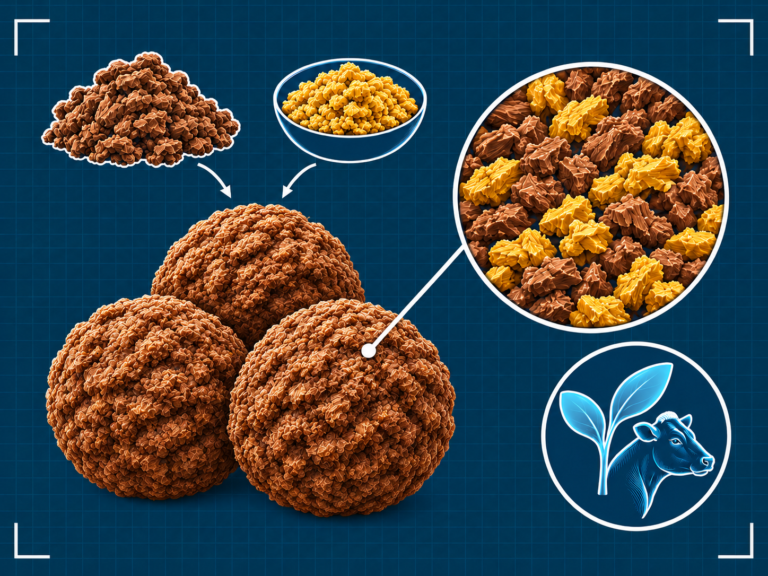
Instead of mixing in minced meat, a few animal-derived ingredients chosen for flavor, fat and color go into one standard plant-based burger at low levels, so each one’s effect can be measured against the same baseline.
Progress so far
Where the project stands
The project runs in stages. Each stage tests what the previous one left open, so every finding is reported with the stage that produced it.
 Done
Ingredient screening
Late 2025
Done
Synergy screening
Early 2026
Done
External sensory panel
May 2026
Stage 1 · Ingredient screening · completed
Does each animal-derived ingredient improve the burger on its own at low levels?
Five animal-derived ingredients (beef tallow, bovine collagen, bone broth paste, soluble beef protein and a meat flavor extract developed in-house) were each added on their own to the same standard plant-based burger and compared with that burger without them by the Labs team’s trained internal tasters.
Tallow and the meat flavor extract each move the burger toward beef
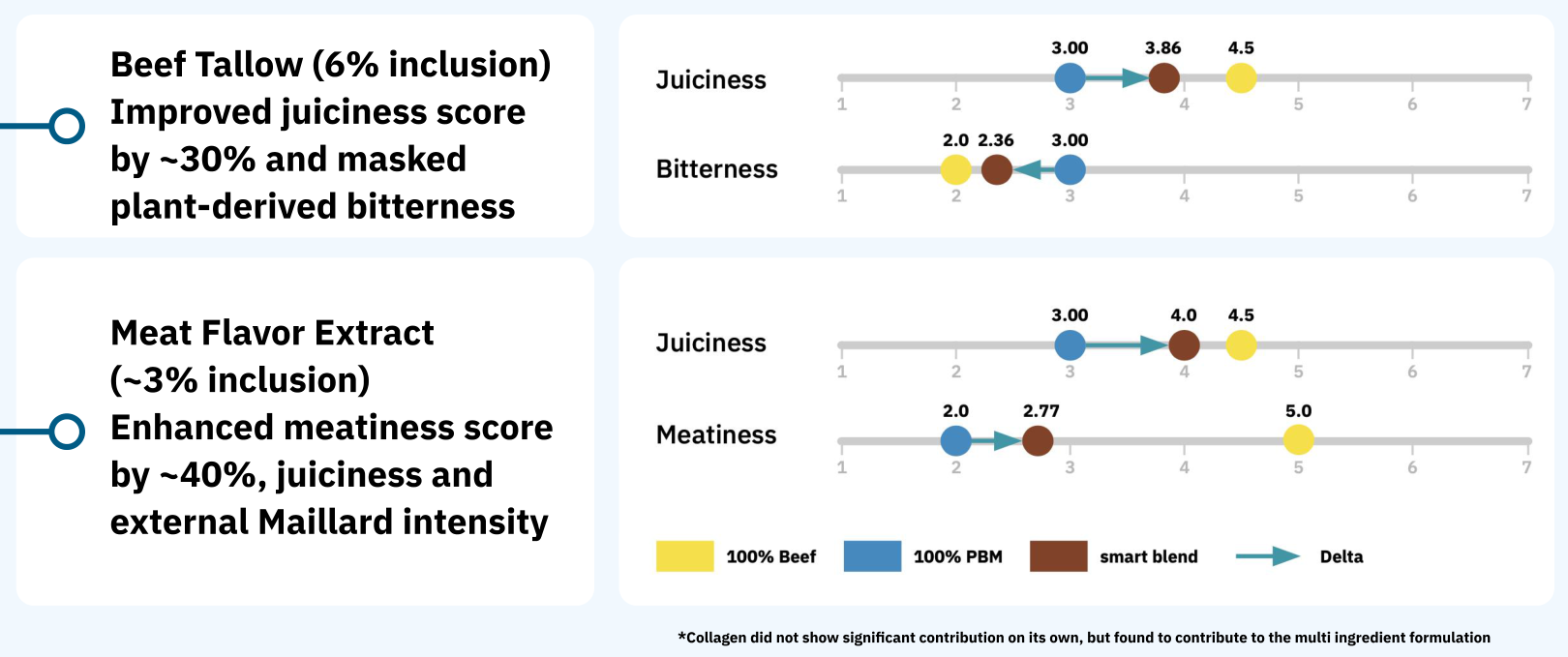
These were directional tastings, used to choose the ingredients and their levels for the next stages rather than to prove an effect.
What it established
 Three ingredients earned a place. Beef tallow added juiciness and carried flavor at about 6%, the meat flavor extract browned the patty and deepened its meaty taste at 1–3%, and collagen improved cohesion at about 5%.
Two were dropped. Bone broth paste’s high salt destabilized the patty in every batch, and soluble beef protein added only a mild umami that cheaper ingredients already give.
What it couldn’t show yet
 How each one scores with an independent panel. The internal tastings guided the choices; the published external results cover the final blend (stage 3).
Higher doses. Above about 7% tallow or collagen the patty lost cohesion or turned slippery, so going higher would need a different way of mixing them in.
Stage 2 · Synergy screening · completed
Do the chosen ingredients work better together than alone?
Tallow, the meat flavor extract and collagen were combined in pairs in the same burger, at about 9% and 15% animal-derived ingredients in total, with salt and fat adjusted so each pair’s effect could be judged on its own, and tasted by the internal panel.
The pairs set the final blend: about 6% tallow, 3% meat flavor extract and 5% collagen, or about 14% of the patty in all. That sits at the edge of the range the project calls 90:10 (86:14 to 94:6), chosen to show the most the three ingredients can do.
What it established
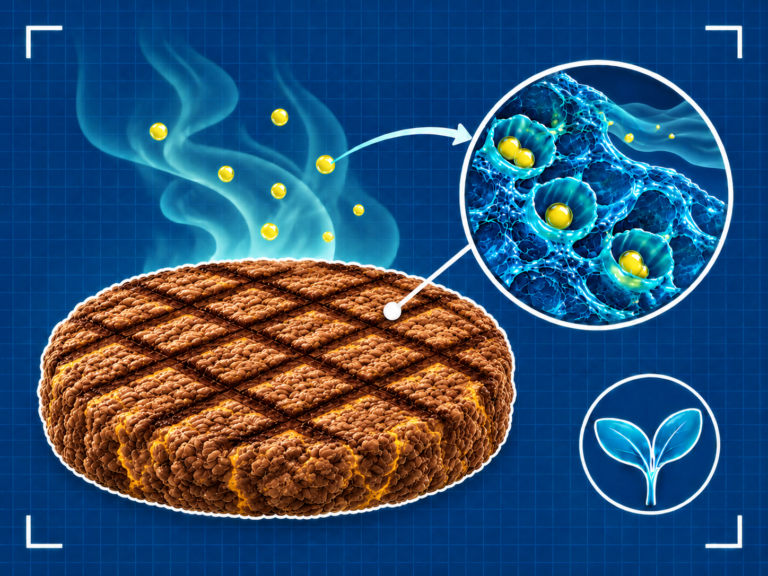
Tallow and the flavor extract boost each other. The fat carried and prolonged the extract’s meaty taste, and the patty browned more with both than with either alone.
Tallow and collagen complement each other. Collagen held the fat in the bite for longer, prolonging the oily, meaty mouthfeel.
Collagen and the flavor extract don’t interact. Neither changed what the other did.
What it couldn’t show yet
Whether the pairings hold for an independent panel. These were internal assessments; the external panel tested the final blend, not each pair.
Stage 3 · External sensory panel · completed
Does the blend move a plant-based burger measurably toward beef?
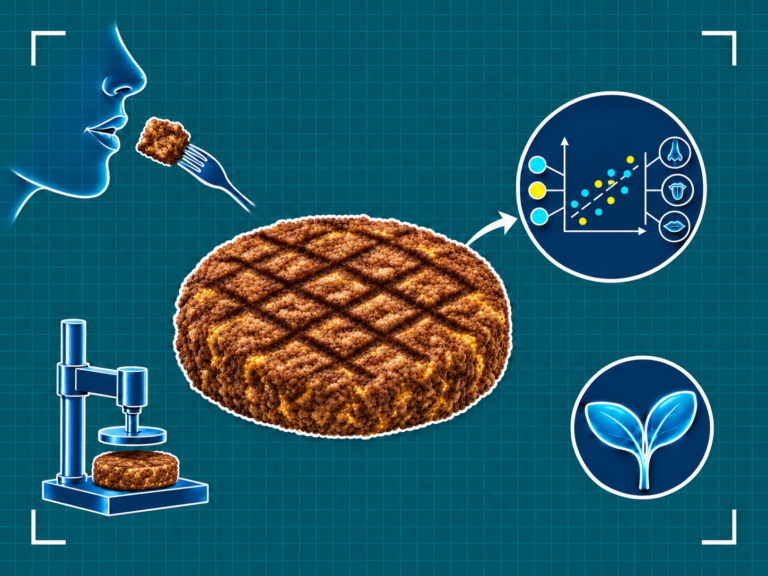
New Sense Research ran a trained descriptive panel that scored four burgers side by side: 100% beef, the 100% plant-based burger, the blend, and a 50:50 mix of the plant-based burger and minced beef as a conventional-blend reference, all cooked the same way.
The blend moves toward beef on taste and browning
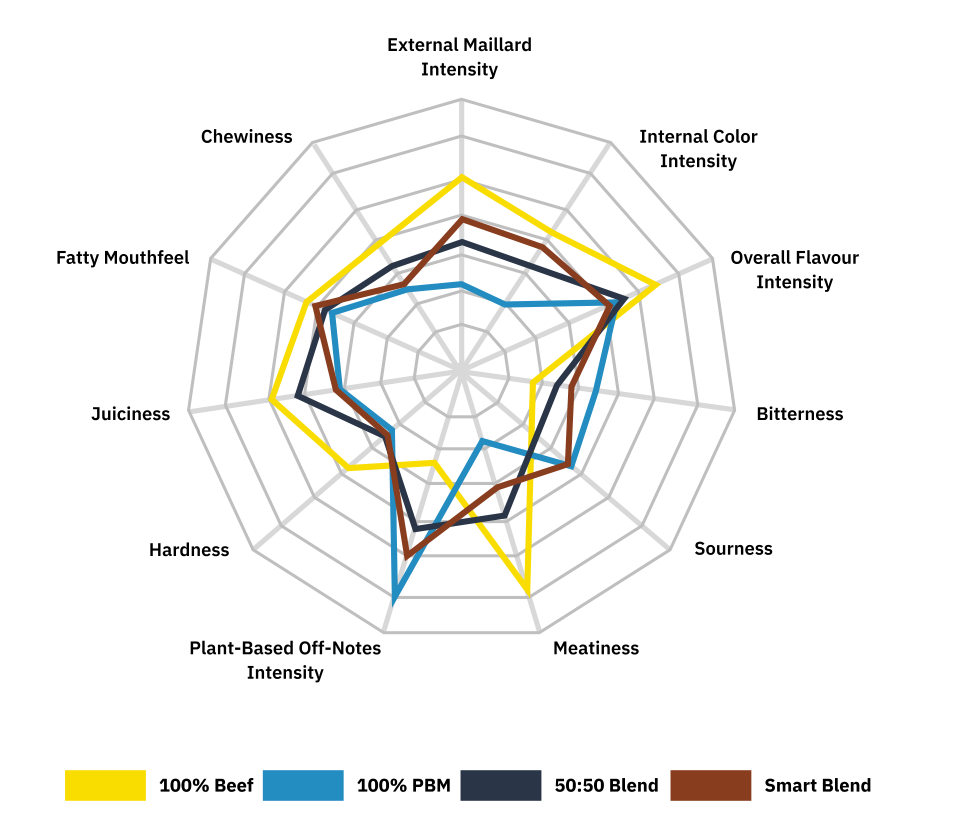
Overall liking, on a 0–10 scale, followed the same pattern: 4.7 for the blend, against 2.9 for the plant-based burger and 8.7 for beef. From a trained panel, that is a direction a consumer test would need to confirm.
What it established
A meatier taste. Meatiness rose from 1.82 to 3.09 on a 1–7 scale, about a third of the way to beef (5.74), with no difference detected from the 50:50 blend.
No internal color difference detected. Internal color, a strong cue for doneness, did not differ significantly from beef (3.86 against 4.34).
Fewer plant notes, more browning. Plant off-notes dropped and the outside browned more, both significantly, though neither reached beef’s level. Bitterness fell too, but not significantly.
What it couldn’t show yet
Beef-like texture. Juiciness, hardness and chewiness stayed at the plant-based burger’s level, so the plant base itself (texturized vegetable protein and methylcellulose) likely has to change.
Lower acidity. The blend was as acidic as the plant-based burger while the 50:50 blend was not, which points to the plant base; a short reformulation could test it.
Whether it pays off commercially. A preliminary raw-material estimate puts the blend at about $4.32/kg against $5.94/kg for a 50:50 blend, but the meat flavor extract is over half that cost and has no commercial supply or confirmed regulatory status yet.
Who’s involved
How the work is split
Labs by GFI Israel

Project lead, experimental executor
Study design, formulation, in-house experimental work, the in-house meat flavor extract and the open-access report.
Sensory partner · stage 3

New Sense Research
An independent sensory research company that ran the external tasting panel.

Talk to the project lead
Anton Slavkin
Associate Director of Food Engineering and Projects Lead · labs@gfi.org
Last updated: October 2026
Related
More projects on Tools & formulations
Labs by GFI Israel | A GFI Israel initiative | Complementary to GFI’s global alternative protein work
Contact: labs@gfi.org
