
Taking the guesswork out of formulating with mycelium
Projects · Work with us · Team
Labs / Projects / Mycelium performance
Sensory performance
Tools & formulations
Active
Taking the guesswork out of formulating with mycelium
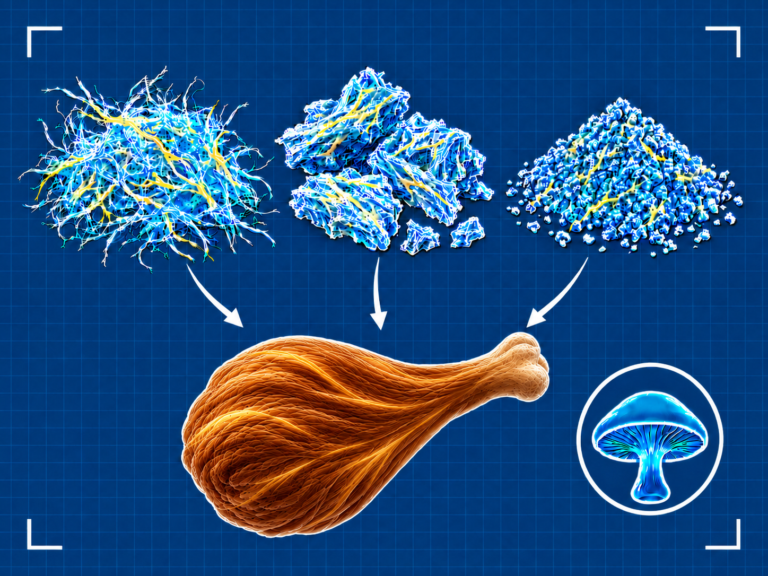
Commercial mycelium ingredients are tested side by side with texturized vegetable protein in standard plant-based recipes, aiming for open data on where they add texture and juiciness.
 Stage
Stage 1 under way · producer samples arriving
 Timeline
Study through Dec 2026 · report early 2027
 Execution
With Studio Fava, a product-development partner in Europe
 Open output
Open report and test protocol
The gap
Mycelium ingredients: promising texture, no open performance data
Mycelium promises fibrous texture and umami for plant-based meat, but no open resource shows developers how a given ingredient performs in a finished product.
Texturized vegetable protein, the standard texturizer in plant-based burgers, is well characterized: its measured properties have been linked openly to how a patty cooks and bites. Mycelium ingredients vary from producer to producer, and the performance data that exists is held privately by larger companies. Developers are left to test each ingredient by trial and error, which slows adoption and leaves smaller producers without a benchmark.
Texturized vegetable protein already has open benchmarks: one study of 28 commercial products found that rehydration capacity drove patty cooking loss, hardness and juiciness. We found no comparable open study of commercial mycelium ingredients (Hong et al., Foods, 2022)
Who benefits
Who gains if mycelium ingredients come with open performance data
The results and test methods are published open access, with every producer kept anonymous, so anyone can use them.
Plant-based meat developers
Open data to pick a mycelium ingredient, set how much to use alongside or instead of texturized vegetable protein, and weigh its cost before their own trials.
Mycelium ingredient producers
An independent benchmark of how their ingredient performs against texturized vegetable protein, and an open method to test new products the same way.
Researchers
Open methods and results that aim to link ingredient properties to burger performance, ready to extend with new ingredients.
How it works
Test every ingredient in the same burger
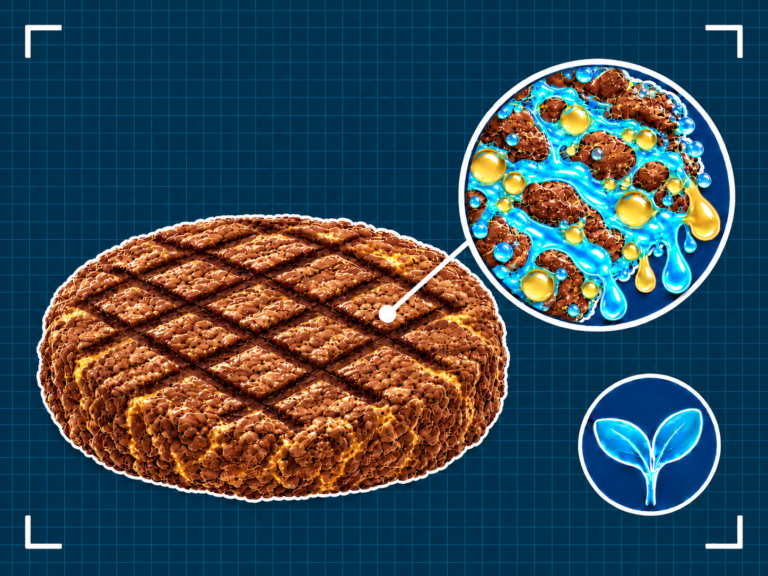
Each mycelium ingredient and a texturized vegetable protein (TVP) reference are characterized the same way, then made into the same plant-based recipes, so any difference traces back to the ingredient.
Progress so far
Where the project stands
The project runs in stages. Each stage tests what the previous one left open, so every finding is reported with the stage that produced it.
 Now
 Next
Stage 1 · Now
Do commercial mycelium ingredients perform differently from TVP in the same burger?
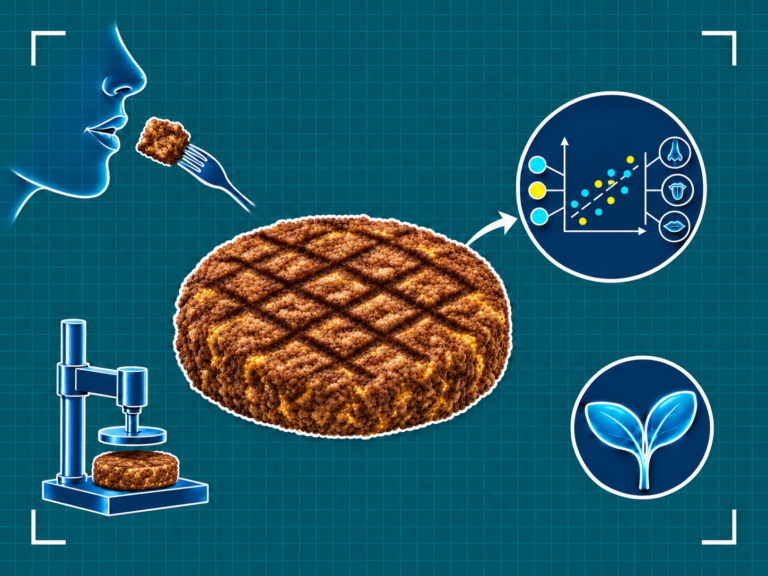
Stage 1 compares several commercial mycelium ingredients, all grown by submerged fermentation, with TVP. It runs in three steps:
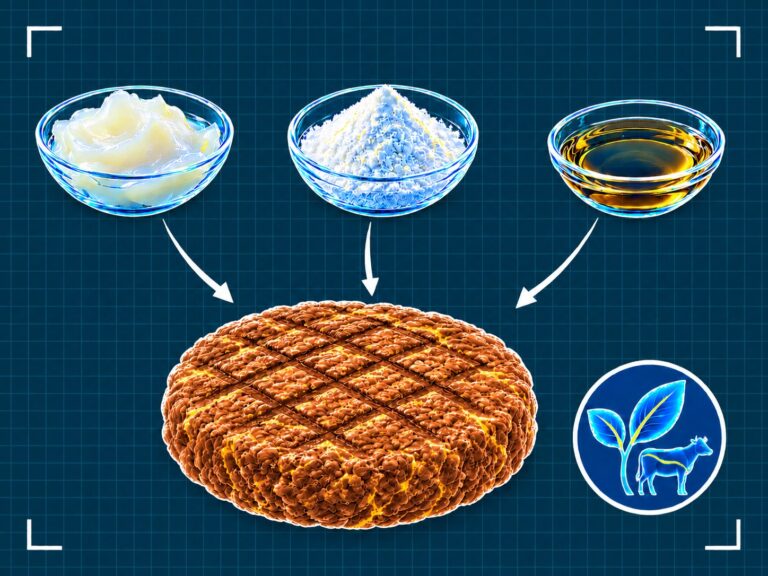
- Measure each ingredient and TVP the same way, including water and oil holding, density and nutritional values.
- Make the same plant-based burger, and a chicken-style product, with each, using mycelium both in place of all the TVP and as part of it.
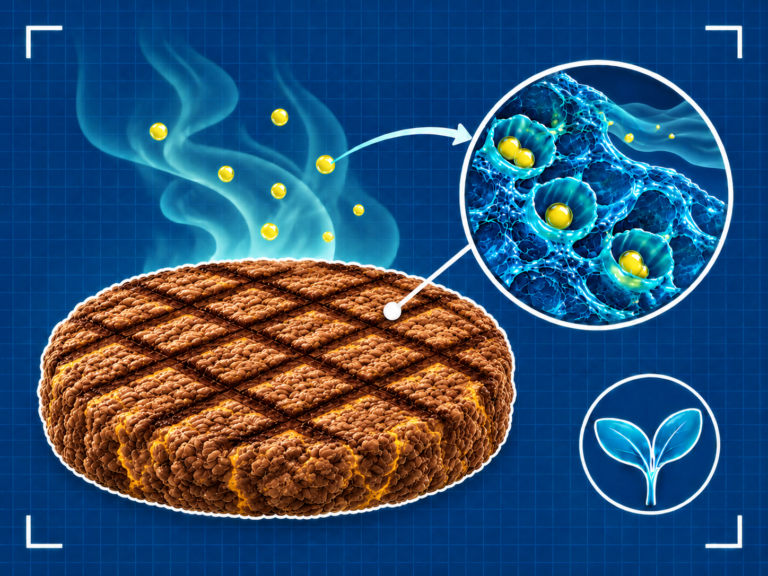
- Compare texture and browning color by instrument and taste on a small internal panel, then weigh what each ingredient costs to use.
Every ingredient goes into the same plant-based recipe, made and cooked the same way with no added flavors, and TVP prepared the same way is the reference.
Stage 2 · Next
Do consumers notice the differences the lab measures?
If stage 1 finds differences worth confirming, the next step is a consumer tasting panel run with an external sensory provider, to test whether consumers notice them too.
Who’s involved
How the work is split
Labs by GFI Israel

Project lead, experimental executor
Study design, scientific direction, experimental work, data analysis and the open-access report.
Product-development partner · stage 1

Studio Fava
A food product-development studio in Europe runs the sourcing, ingredient tests, model burgers and tasting.
Ingredient producers

Commercial mycelium producers
Supply ingredient samples; the published results keep every company anonymous.

Last updated: November 2026
Related
More projects on Sensory performance


Labs by GFI Israel | A GFI Israel initiative | Complementary to GFI’s global alternative protein work
Contact: labs@gfi.org
